

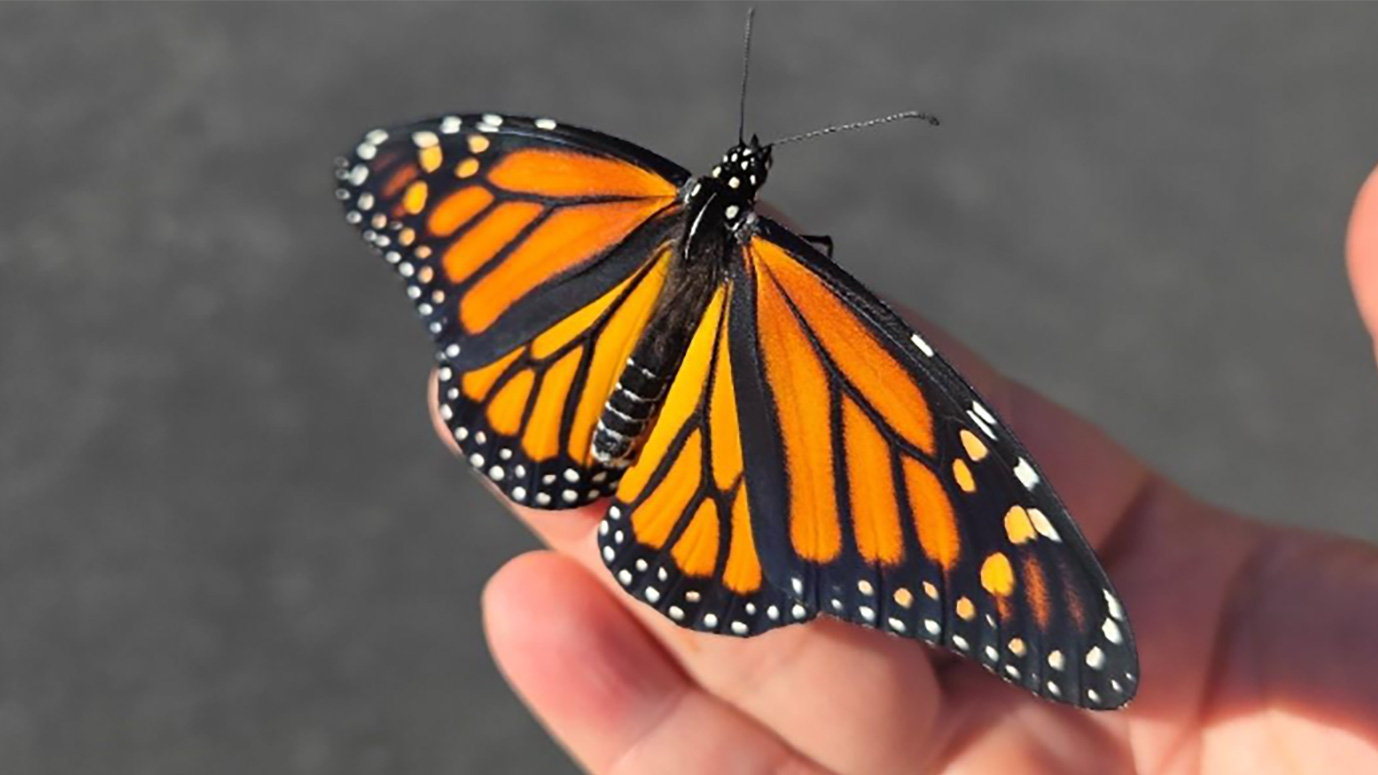
This time of year, toward the end of winter, I start to miss the lush greenery and warmth of August and September. I think about the migrators of the world that spend the summer with us here in central Pennsylvania and then move on to find warmer climates in the winter. My favorite migrator is the monarch butterfly.
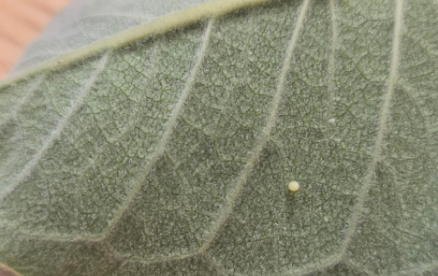
Starting in late July, Shaver’s Creek Environmental Center’s conservation interpreters raised more than 50 monarch caterpillars, then tagged and released the butterflies as part of the 2025 Monarch Watch program. We raised 30 females and 21 males, with most being raised from eggs. We were lucky enough to have Mary Krupa, one of the conservation interpreters, find and bring in more than 30 monarch eggs! I was amazed to see these teeny tiny eggs, about the size of a pinhead, for the first time. “How in the world did Mary find these,” I thought to myself. But once I knew what to look for, I was able to find eggs on milkweed plants as well!
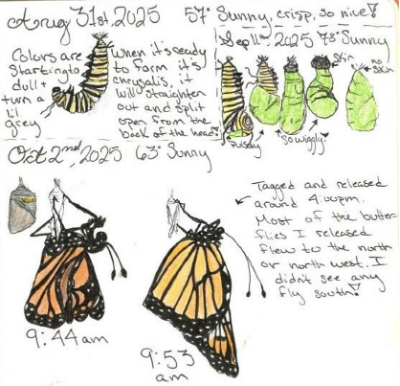
Throughout the late summer and early fall, I captured their lifecycle through nature journaling.
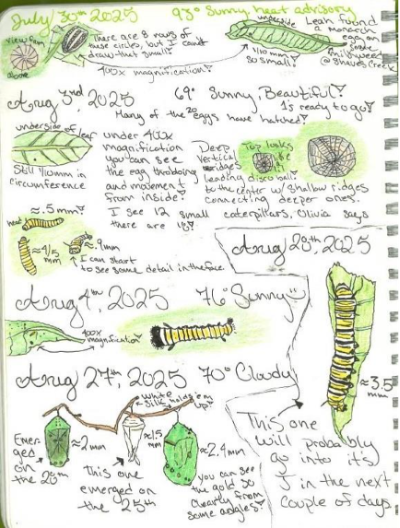
Monarch Butterfly Lifecycle
Monarch butterflies lay eggs on the young leaves of milkweed plants. Eggs are very small, round, and ridged. They are initially white, then become transparent as the young instar (or caterpillar) is ready to emerge. Eggs typically hatch in three to four days.
At the larval stage, a small white instar with a tiny black head crawls out of its egg, then turns 180° and eats its shell. The young instar just eats the tiny hairs from the underside of the milkweed leaves, referred to as “mowing the lawn.” This “mowing” behavior gives way for the young instar to slowly isolate the flow of undesired latex from the plant, starting the two-week process of becoming an eating machine.
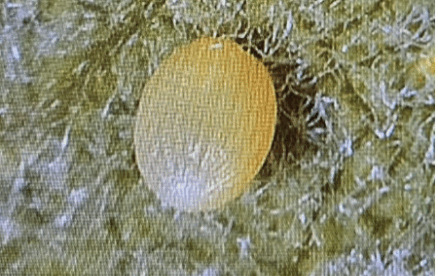
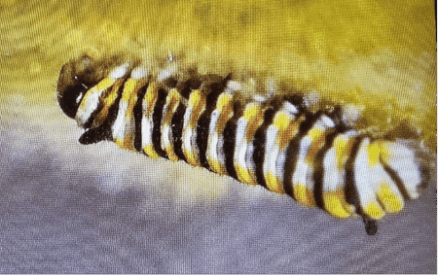
Monarchs go through five instar phases, shedding skin each time so that their bodies have enough room to grow. The instars grow bigger and brighter with each shed. The bright yellow coloration indicates to predators that with a diet of toxic (to most things) milkweed, this is a dangerous snack. This larval stage is typically 10–14 days.
When the instar is ready to transform into its pupal stage, it stops eating and looks for the perfect place to form its chrysalis. The instar secures itself to the selected surface by creating a silk pad and anchoring its tail, or cremaster. Once attached, the instar hangs upside down, curling its thorax into a “J” shape. It will hang out here for 1–3 days.
To catch an instar transitioning into the pupal stage is a sight to behold! As the instar gets ready to form its chrysalis, the once bright yellow bands around its body become dull. The instar straightens out from its “J” shape, and the antenna looks almost wilted. The back of the instar’s head bursts open, revealing a vibrant green brainy sack that no longer resembles the instar. The yellow, white, and black skin of the instar peels away and folds up the body of the newly forming chrysalis and falls away. The green chrysalis violently wriggles and spins around as it loses its old skin and hardens into its new form. This transformation takes about 10 minutes, and the chrysalis stays in this form undisturbed for 10–14 days.
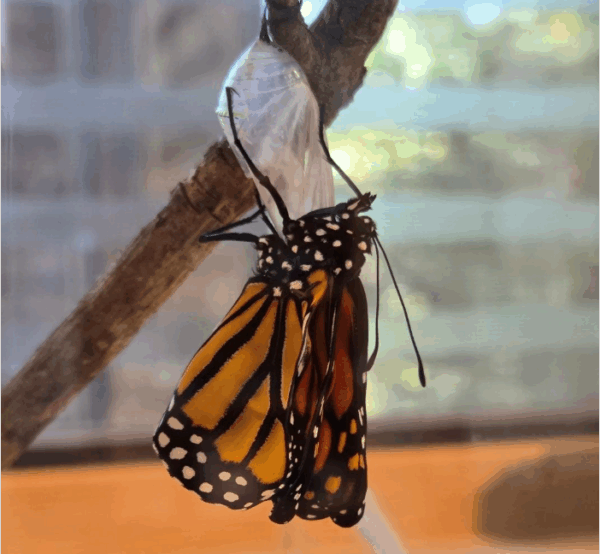
About a day or two before the pupa is ready to transform into its adult phase, the once bright green chrysalis starts to become transparent or black. As the adult butterfly starts to emerge from its chrysalis, it begins to loosen itself from the shell. The shell breaks open, and the adult butterfly falls out quickly. It holds onto the shell so that its wings, which are about 1/3 of the size they will be, can fully develop and harden. The wings get to their full size in about half an hour and will harden and be ready for flight just a few hours after emerging from the chrysalis.
Tagging and Releasing Monarch Butterflies
The Monarch Watch program sent Shaver’s Creek a packet of tags to gently place on any reared or wild-caught monarchs. Each small, round tag has an identification number, a website, and Monarch Watch printed on it. The stickers are lightweight and do not interfere with the flight of the butterflies as long as they are applied properly.
If you have never tagged a monarch butterfly before, the first couple of tags can be intimidating. You must pick up the butterfly by gently, but firmly, pinching its four wings together. The sticker is placed in the middle of the bottom wing in the middle of the “mitten shape” cell. The sticker number is associated with data about the individual monarch including date and location it hatched, sex, and whether it was raised or found in the wild. These data are recorded onto sheets provided by Monarch Watch and entered into a database.
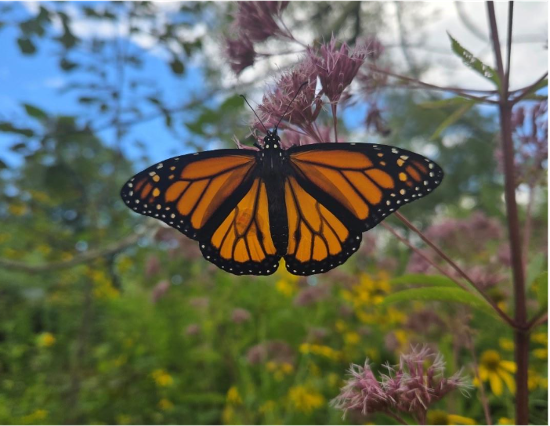
Then, it’s time to release the butterfly! This part is especially fun when there are visitors at Shaver’s Creek who want to release butterflies with us. We share the experience of raising butterflies, and some visitors are even able to hold the butterflies before they fly away.
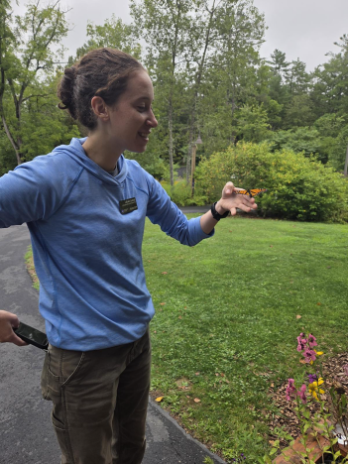
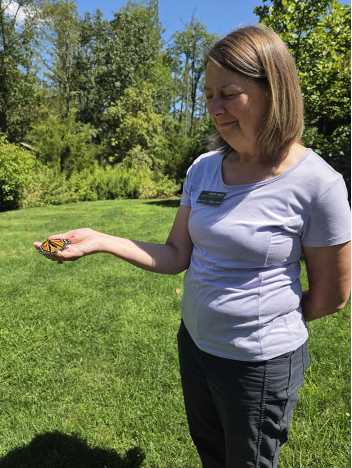
We can track butterflies because citizen scientists throughout North America make observations and input data through the Monarch Watch program. I thought that the butterflies would fly to the south after being released, but most of them fly north toward the higher elevation ridge. I wonder if the butterflies use the ridge to find stronger wind currents to take them farther south than they’d be able to go on their own.
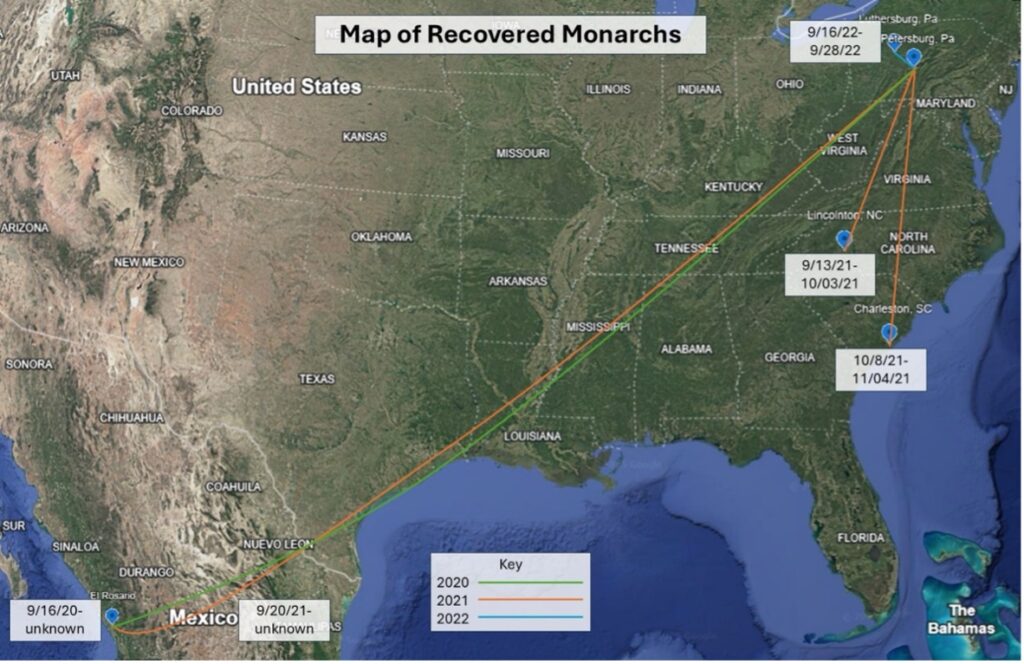
In the fall, monarch butterflies migrate to southern Florida and Mexico to spend the winter. Sometimes, in the heart of winter, I envy the butterflies for their long journeys to warmer climates. But I really do enjoy winter in central Pennsylvania and those feelings don’t last too long. This winter, I am working with the Central Pennsylvania Master Naturalists to build a large pollinator garden at Shaver’s Creek to provide more habitat for native pollinators. I look forward to another fun summer of sharing the joys of raising monarch butterflies with our visitors.
If you would like to learn more about milkweed, monarch instars, or butterflies, I suggest you check out monarchwatch.org for some great information and opportunities to participate in citizen science projects.